
Introduction
Rankings, traffic, and conversions still matter, but they don't tell you whether buyers can find your brand, understand it, and feel confident enough to choose it, especially now that people move between search engines, AI assistants, and marketplaces before deciding anything. Real search performance comes down to three questions: Are you present where demand forms, are you being understood, and is anything actually compounding? Answering these honestly shows where your SEO and digital marketing strategy need to focus next.
Question 1: Are You Present Where Demand Forms?
This isn't about rankings or impression share. It's about whether your brand shows up where demand starts, not just where it converts.
Where Demand Actually Starts
People are present in a category long before they search your brand name through the following:
- Asking early, exploratory questions
- Comparing options and reading reviews
- Checking marketplaces and creator content
A brand that only appears once someone already knows its name is arriving late. It may look efficient, since branded demand converts well, but it means the brand depends on other forces to create demand before showing up to collect it.
The Presence vs. Conversion Blind Spot
This is a common blind spot in organic growth planning: mistaking weak presence for weak conversion. A brand can have healthy branded search and a respectable cost per acquisition while still sitting in the bottom half of the category for actual presence, converting people who already knew it while missing everyone else exploring the space.
Travel shows this clearly. Presence, not conversion, drives market share there, since people shop long before choosing a brand. If branded conversion is strong but unbranded presence is weak, the opportunity sits upstream: review sites, marketplaces, creator content, and long-tail non-brand queries.
Presence alone isn't enough, though. Being found only helps if what people find makes sense.
Question 2: Are You Being Understood?
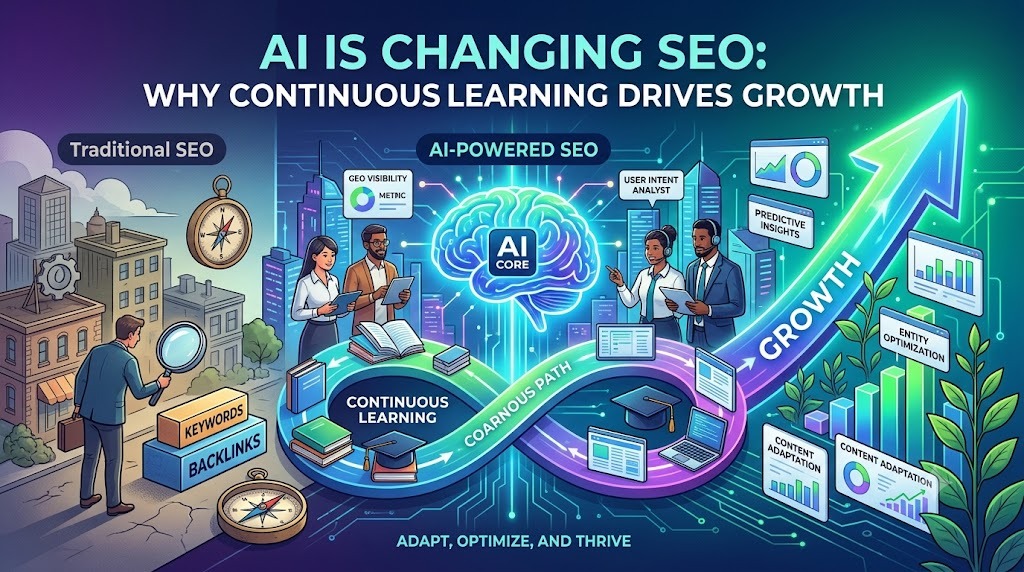
Once your brand shows up, is it understood in a way that helps you get chosen? This is where AI SEO matters as much as traditional SEO.
Why Buyers Get Left to Connect the Dots
People search to reduce doubt: "is it worth it," "best alternative to X," "what do real customers think." Many brands answer this poorly or too late, with the ad, organic results, reviews, and the AI answer all saying something slightly different, leaving the customer to connect the dots alone.
AI Search makes this harder because the answer is compressed, unstable, and can read a month differently from now. Brands now compete to be included, accurately described, and trusted within an answer that keeps shifting.
What to Know About AI Visibility
A few things worth knowing about AI visibility in your digital marketing approach:
- AI referral traffic can look small even for frequently cited brands, yet those visitors often convert at a higher rate, since they arrive further along in the decision.
- Visibility inside AI answers doesn't guarantee being chosen. In some categories, like finance and retail, the brands appearing most often in AI answers are actually losing share, usually because they're described using outdated or unfavorable comparisons.
The fix isn't more paid media, it's the source signals AI pulls from: editorial coverage, structured content, and third-party comparisons. A practical starting point is to audit your AI citations by running the prompts your buyers would run and checking what's being said about you.
Question 3: Is Anything Compounding?
The third question looks beyond a single reporting period: is your brand becoming easier to find, trust, and choose over time, or does every sale still need to be bought?
Signs of Real Compounding
Signs of real compounding and genuine organic growth include branded search growing without heavy spend, direct traffic strengthening on its own, and review volume building steadily. These signal a brand accumulating trust that works harder without being pushed every time.
The opposite is just as visible: paid dependency climbing, organic demand softening, and branded search only moving when campaigns are live. The brand looks active, but nothing is building.
Diagnosing the Gap
Comparing discoverability against actual market share usually diagnoses the problem:
- Market share outperforms discoverability: running on borrowed time. Reinvest in presence now.
- Discoverability outperforms market share: something is building that hasn't surfaced yet. Hold and let it compound.
- Weak presence, healthy momentum: the funnel works, but the top is empty. Invest in category visibility.
- Strong presence, weak interpretation: fix how the brand is described before spending more on media.
- Weak momentum despite strong presence and interpretation: proof is missing, reviews and word of mouth need building.
Turning the Framework Into Action
Start by auditing where your brand actually sits on presence, interpretation, and momentum, then fund the single gap causing the most drag rather than spreading budget evenly across all three.
Most brands don't sit cleanly in one bucket. The value of this framework isn't picking a single fix, it's knowing which of the three gaps to fund first and which to simply let run.
Make It a Recurring Habit
Treat this audit as an ongoing part of your search engine optimization routine rather than a one-time exercise. Search behavior, AI answers, and buyer expectations keep shifting, so revisiting presence, interpretation, and momentum every quarter keeps your digital marketing efforts aligned with how people actually discover and evaluate brands today, instead of how they used to.
Conclusion
The real challenge is knowing which of these three problems you're dealing with before optimizing the wrong one, since customers experience the search result, review, ad, and AI answer as one decision environment, not separate silos. Presence feeds interpretation, interpretation feeds momentum, and momentum lowers the cost of presence next time, so finding where that loop breaks is the fastest way to fix your digital marketing strategy.
Frequently Asked Questions
Q1. What's the difference between SEO and AI SEO?
Traditional SEO ranks in search results. AI SEO focuses on whether your brand is included and trusted inside AI-generated answers.
Q2. Does higher AI search visibility mean more market share?
Not always. In some categories, high-visibility brands are actually losing share due to poor descriptions.
Q3. Where should I invest first: presence, interpretation, or momentum?
Compare discoverability against market share. The gap points to the constraint worth funding first.






Leave a Comment