
Introduction
Google's John Mueller and Martin Splitt recently pushed back on a growing trend in AI SEO: building separate markdown versions of a website specifically for AI systems and large language models. Their message was direct. Creating a parallel, machine-only version of your content adds complexity without a clear payoff, and publishers are better off improving the HTML pages they already have. For businesses investing in AI SEO and generative engine optimization, this guidance is worth understanding before committing resources to a markdown-only strategy.
Why the Markdown-for-AI Trend Took Off in the First Place
As AI Overviews, chatbots, and other AI-driven search experiences became bigger sources of traffic, some publishers started wondering if simplified, markdown-only versions of their pages would be easier for AI crawlers to read and cite. The logic seemed reasonable on the surface: strip away complex HTML, layouts, and design, and give AI systems plain, clean text instead. Google's own team has now stepped in to explain why that instinct, while understandable, creates more problems than it solves.
What Google Actually Said About Markdown for AI SEO
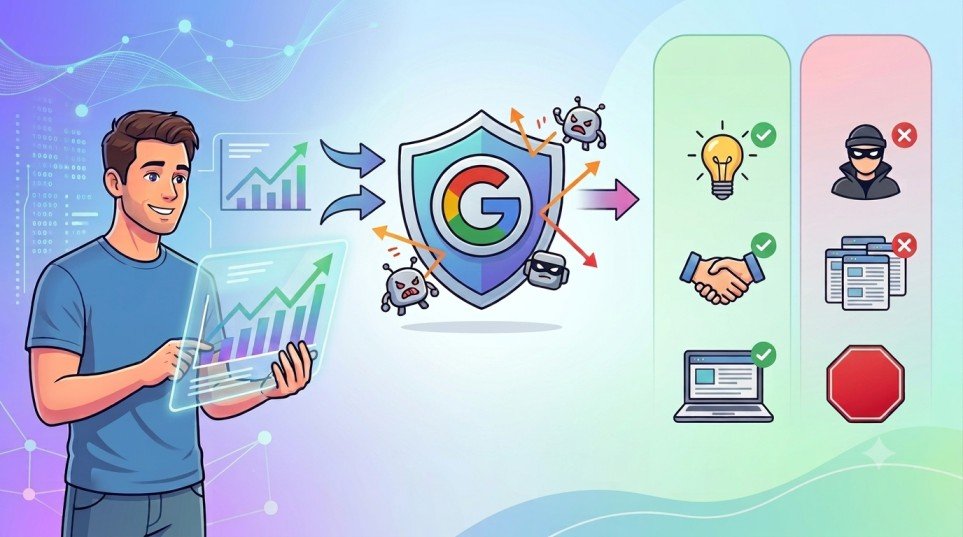
According to Google's Search Off The Record podcast, Martin Splitt explained that markdown alone is a poor user experience because it does not support layouts, colors, or the kind of visual structure that makes a page easy to use. Building a system to add layout on top of markdown effectively means recreating what HTML already does, only with extra steps. Splitt also pointed out that maintaining a markdown version purely for AI systems while keeping a full HTML version for human visitors doubles the publishing workload. John Mueller agreed, adding that while many HTML pages are genuinely poorly structured, the fix is improving that structure, not building an entirely separate machine-facing version of the content.
Key Reasons Google Advises Against Markdown-Only AI Content
Poor User Experience: Markdown does not natively support layout, color, or visual design, all of which help real visitors understand and engage with a page.
Duplicated Publishing Work: Running both an HTML version for users and a markdown version for AI systems effectively doubles the effort required to publish and maintain content.
Harder to Detect Problems: Broken HTML pages tend to get flagged by frustrated users, but a broken markdown version aimed at AI systems can go unnoticed for weeks since no human is checking it.
Comparable to Past Dynamic Rendering Issues: Google compared this approach to dynamic rendering, an earlier practice of serving different content to bots and users that often created more debugging problems than it solved.
Human Visual Processing Still Matters: Since a significant portion of how people process information is visual, stripped-down markdown content risks working against user experience even as it targets AI systems.
Benefits of Improving Your Existing HTML Instead
Focusing on one well-structured HTML version of your content, rather than maintaining a parallel markdown version, keeps publishing simpler and easier to maintain over time. It also protects user experience, which remains a real, if often indirect, ranking factor even as AI search grows. For AI SEO specifically, well-structured, clearly written HTML tends to be just as accessible to AI crawlers and language models as markdown, without sacrificing how the page performs for actual visitors. This approach also avoids the debugging blind spots that come with maintaining a machine-only version nobody is actively monitoring.
Markdown-Only Strategy vs. Improved HTML Strategy
|
Aspect |
Markdown-Only Version |
Improved HTML Version |
|
User Experience |
Poor, lacks layout and visual design |
Strong, supports layout, color, and structure |
|
Publishing Workload |
Duplicated across two versions |
Single version to maintain |
|
Error Detection |
Often goes unnoticed for long periods |
Users report issues directly |
|
AI SEO Value |
Uncertainty adds complexity |
Comparable, without the added risk |
|
Google's Recommendation |
Not advised |
Preferred approach |
Who Should Pay Attention to This Guidance
This matters for any business currently exploring or already running a markdown-based AI SEO strategy, as well as content teams considering it as a shortcut for AI visibility. It is equally relevant for site owners who already have poorly structured HTML pages and are tempted to bypass fixing them by building a separate AI-facing version instead. According to Google's own team, that instinct, while understandable, is the wrong direction to take.
How BMax Digital Helps
At BMax Digital, our approach to AI SEO focuses on strengthening the HTML content businesses already have rather than layering on complexity with parallel markdown versions. That means improving page structure, semantic markup, and content clarity so a single, well-built page serves both real users and AI systems effectively. We stay current on guidance directly from Google's search team, like this markdown caution, so client strategies are built on what actually works rather than speculative shortcuts.
Case Study: Fixing Structure Instead of Duplicating Content
A content-heavy client came to us considering a markdown-only version of their site after hearing it might help with AI visibility. Instead of building a parallel version, we audited their existing HTML pages, found significant structural and semantic issues, and fixed those directly. The result was a single, well-structured site that improved both user engagement and AI citation visibility, without the added maintenance burden of running two separate content systems.
Conclusion
Google's guidance is clear: markdown-only versions of a website built specifically for AI systems create more complexity than value, and the smarter move is strengthening the HTML content you already publish. For businesses focused on AI SEO and organic growth, this means investing in clean, well-structured pages that serve both human visitors and AI systems at once. If you want help auditing and improving your site's structure for AI search visibility, get in touch with Bmax Digital to get started.
Frequently Asked Questions
1. Did Google say markdown is bad for AI SEO?
Google's John Mueller and Martin Splitt cautioned against building separate markdown versions of a website specifically for AI systems, citing added complexity and reduced user experience.
2. Why does maintaining a markdown version create extra work?
Running a markdown version alongside a standard HTML version means maintaining two separate systems, effectively doubling the publishing and upkeep workload.
3. Can broken markdown pages go unnoticed?
Yes. Since AI systems typically will not report an error the way a frustrated user might, a broken markdown page built for AI can remain broken for a long time without anyone noticing.
4. What should businesses do instead of building markdown versions?
Google recommends improving the structure and clarity of existing HTML pages rather than creating a separate AI-facing version.
5. Does this affect regular SEO as well as AI SEO?
Yes. Since user experience remains a ranking-related factor, poorly structured markdown content can work against both traditional SEO and AI search visibility.






Leave a Comment