Introduction
Google has rolled out the August 2026 spam update, and if you manage a website, this is worth pausing on. Algorithm updates like this one directly shape how search engine optimization and digital marketing strategy decisions play out for the months ahead. Whether your priority is classic organic growth or building AI visibility as AI Search becomes a bigger part of how people find businesses, spam updates are the kind of event that separates sites doing SEO the right way from sites that are about to see a drop. This post breaks down exactly what Google announced, who it targets, and what your next move should be.
What Google Actually Announced
Google confirmed the release of the August 2026 spam update, noting that the rollout would take only a few days to complete. The update is global, applying to all languages and regions, and it targets sites that violate Google's search spam policies rather than legitimate businesses doing genuine SEO and digital marketing work. Google was direct about the scope on its own status dashboard and reiterated the announcement on LinkedIn, describing it as a standard spam update rolling out worldwide.
As with any broad algorithmic change, sites that are not intentionally spamming can still see some fluctuation. Google itself acknowledges that "collateral damage" is possible even though the update is aimed squarely at spam techniques, not at honest search engine optimization practices.
August 2026 Spam Update: Quick Facts
- Name: Google August 2026 Spam Update
- Launched: August 18, 2026, at approximately 12:30 pm ET
- Rollout Time: A few days to complete
- Targets: Sites violating Google's search spam policies
- Does Not Target: Link spam or the site reputation abuse policy specifically
- Scope: Global, covering all regions and languages
- Impact Disclosed: Google has not shared what percentage of queries or searches were affected
- Recovery Path: Google recommends reviewing its spam policies for compliance
- Refresh Cycle: Google periodically refreshes this system, and recovery can take several months
Why Spam Updates Matter for AI SEO Tool
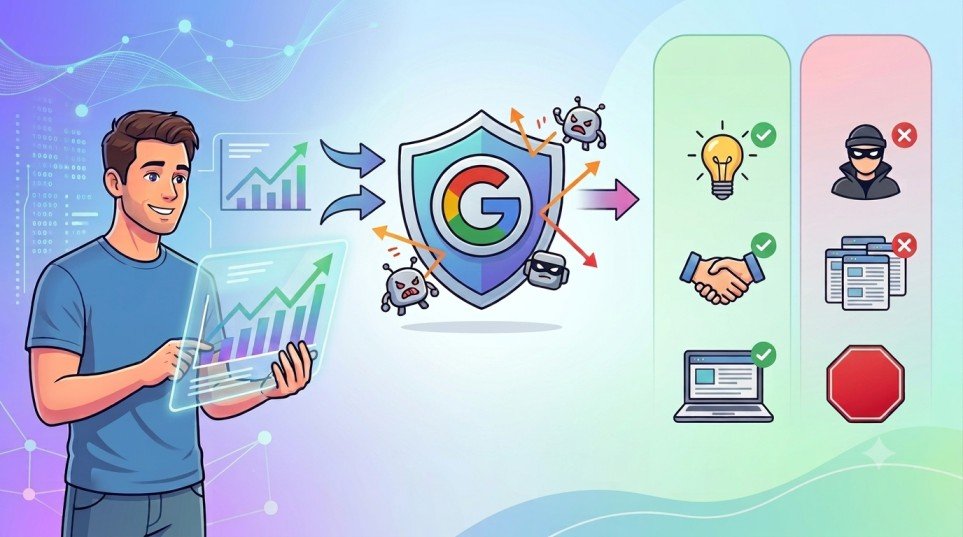
Spam updates aren't just a traditional organic ranking event anymore. Google's spam-fighting system, SpamBrain, is AI-based, and the quality signals it evaluates increasingly overlap with what fuels visibility inside AI Overviews and other AI-driven experiences. As AI Search and generative answer engines pull more heavily from sites Google already considers trustworthy, a site's standing after a spam update has ripple effects on both traditional rankings and LLM visibility. A strong digital marketing strategy today has to account for spam compliance as a foundation for both classic SEO and AI SEO performance.
Key Things to Know About This Update
- Global and Multilingual: The update applies to every region and language at once, not a phased regional rollout.
- Automated Detection: Google's spam-fighting relies on SpamBrain, its AI-based system that continuously evolves to catch new spam tactics.
- Not a Link Spam Update: This release specifically does not target link spam or site reputation abuse, which are handled separately.
- Possible Collateral Impact: Sites not intentionally spamming may still see some movement, which is normal with a broad rollout.
- Recovery Takes Time: Google has stated that recovery from a spam update impact can take multiple months as its systems reassess a site's compliance.
Benefits of Getting Ahead of Spam Updates
Businesses that treat spam policy compliance as an ongoing part of their organic growth strategy, rather than a reactive fire drill, consistently fare better through these rollouts. Clean, policy-compliant sites experience less ranking volatility, recover faster if they are affected, and build the kind of foundational trust that supports both search engine optimization and visibility in AI Search tools. Since AI systems and Google's core ranking systems increasingly draw from overlapping quality signals, staying compliant protects your presence across every surface where customers might find you, not just the traditional search results page.
Spam Update Impact vs. Standard Ranking Fluctuation
|
Aspect |
Spam Update Impact |
Standard Ranking Fluctuation |
|
Cause |
Violation of Google's spam policies |
Normal algorithm refinements, competition changes |
|
Scope |
Often global, affects flagged sites broadly |
Can be page-specific or query-specific |
|
Recovery Timeline |
Can take several months |
Often resolves within days to weeks |
|
Fix Required |
Full policy compliance review and correction |
Content or technical optimization |
|
AI Search Relevance |
High, tied to trust signals AI systems also use |
Indirect |
Who Should Pay Attention to This Update
This matters most for site owners who have used or are unsure whether they've used tactics like scaled content abuse, cloaking, doorway pages, or other practices that fall under Google's spam policies. It's also relevant for legitimate businesses that want reassurance their digital marketing strategy is clean, since a temporary ranking dip during a global rollout can understandably cause concern. Agencies and in-house marketing teams managing organic growth for clients or their own brand should treat this as a prompt to audit their current standing against Google's published spam policies.
How BMax Digital Helps
At BMax Digital, we monitor Google's algorithm updates, including spam updates like this one, as part of how we protect and grow client visibility across both traditional search engine optimization and AI SEO. That means auditing sites against Google's current spam policies, identifying and correcting any risky practices before they cause damage, and building content and technical strategies that hold up through future updates. We also track how these changes affect LLM visibility, since AI Search is increasingly built on the same trust signals Google's spam systems evaluate.
Case Study: Staying Clear Through a Spam Update
A client in a competitive e-commerce niche came to us concerned after seeing ranking volatility during a previous Google spam update. Our audit found a handful of legacy practices left over from an earlier agency, including thin, auto-generated category pages. We rebuilt those pages with genuine, useful content and corrected the remaining policy risks before the next spam update cycle. When the following update rolled out, the client's rankings held steady while several competitors in the same space saw visible drops.
Conclusion
Google's August 2026 spam update is a reminder that strong SEO and digital marketing strategy can't be separated from policy compliance. As AI Search and LLM visibility play a bigger role in how customers find businesses, staying compliant protects your presence everywhere search is heading next. If you want a clear read on where your site stands, get in touch with BMax Digital.
Frequently Asked Questions
- What is the Google August 2026 spam update?
It's a global algorithm update, announced by Google on August 18, 2026, that targets sites violating Google's search spam policies. The rollout was expected to take only a few days. - Does this update target link spam?
No. Google specifically stated this update does not target link spam or the site reputation abuse policy, which are addressed through separate systems. - How long does it take to recover from a spam update?
Google has said recovery can take several months, as its automated systems need time to recognize that a site has come into compliance with its spam policies. - Can a legitimate business be affected by this update even without spamming?
Yes, some collateral impact is possible with any broad rollout, though the update is specifically aimed at sites violating spam policies rather than legitimate SEO practices. - Does a spam update affect AI Search visibility too?
Indirectly, yes. Google's spam-detection system is AI-based, and the trust signals it evaluates increasingly overlap with what supports visibility in AI Search tools, making spam compliance relevant to both traditional SEO and AI SEO.









Leave a Comment